

Sustainability and building compliance expert. Specialising in low energy design, SAP, SBEM, BREEAM, and air testing for the construction industry,
Andrew Sadler
Schools, libraries, council offices and community hubs play a vital role in our everyday lives. Unfortunately, many of these buildings are stuck in the past when it comes to energy efficiency and carbon performance. With rising operational costs, tighter sustainability targets, and growing public awareness, there’s never been a better time to ask: how can we make these spaces cleaner, greener, and future-ready?
Whether you’re planning a new development or upgrading an existing site, here’s how public buildings can move closer towards a low carbon future.
Why public buildings matter in the journey to Net Zero.
Public buildings account for a small but significant chunk of the UK’s built environment emissions. Unlike residential projects, they often serve hundreds (if not thousands) of people daily. That scale means that every change (whether it’s smarter insulation, switching to electric heat, or fitting PVs) can deliver outsized benefits in energy savings and community wellbeing.
But there’s another reason these spaces matter: visibility.
Schools, community halls and civic buildings are public. When they go green, they set an example. They demonstrate what’s possible and encourage broader shifts in behaviour and policy.
Retrofit, not rebuild.
One of the most powerful routes to greener public spaces is retrofits. New schools and public buildings are already subject to tightening efficiency standards, but the real challenge lies in the existing stock.
Retrofit doesn’t always mean deep, disruptive work. It can be staged and strategic: improve fabric first, optimise ventilation, and then move on to heating systems and renewables.
At Buildpass, we often advise a phased approach: start with a building performance evaluation (BPE), establish your energy baseline, and then prioritise upgrades based on carbon impact, cost, and comfort. From there, you can layer in smarter systems, better controls, and even on-site generation.
The unique case of school buildings.
School buildings are unique. They often have long hours, high occupancy rates, and tight budgets. But they also present real opportunities for energy innovation.
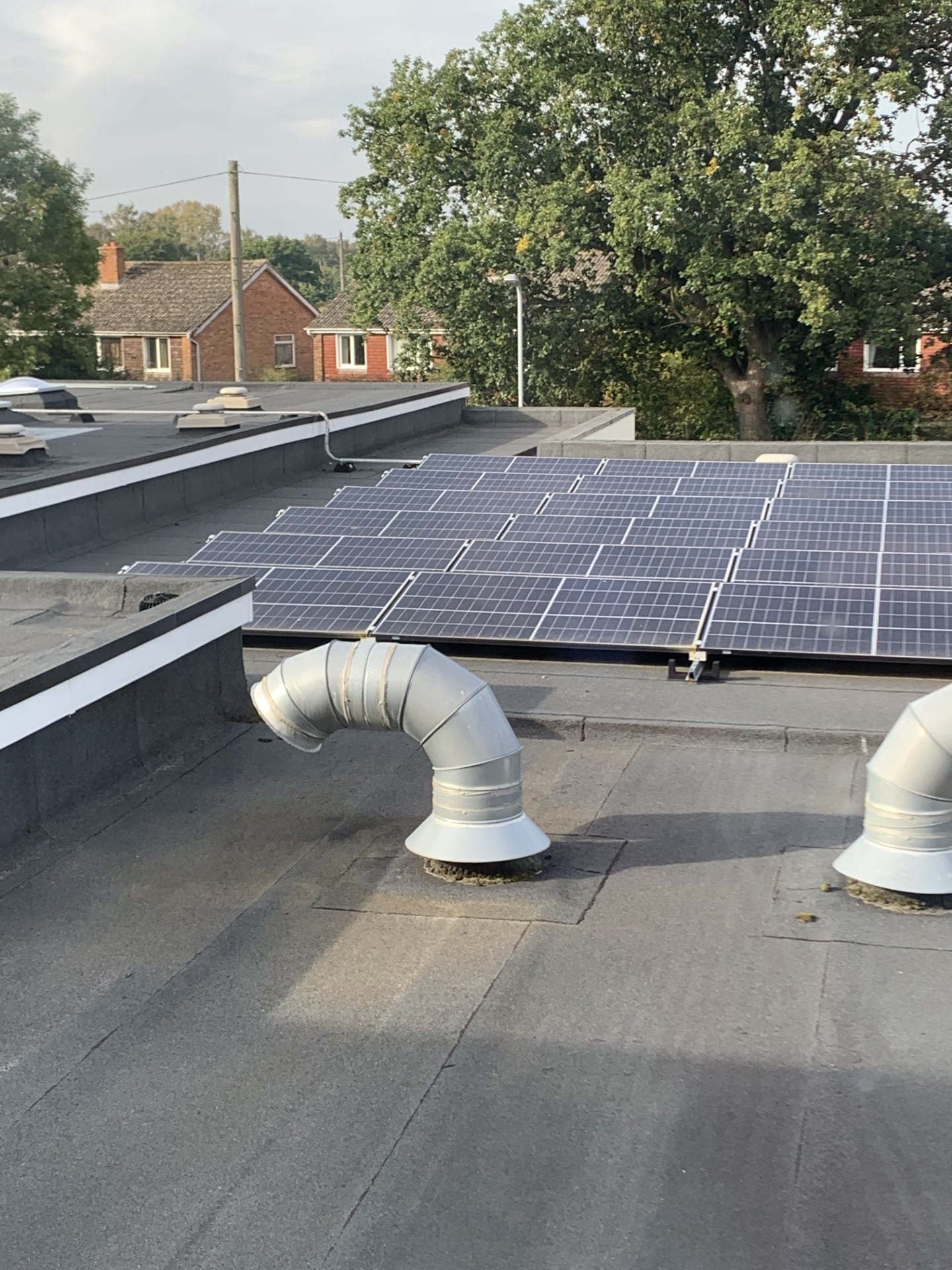
Take heat. Many schools are still reliant on legacy gas boiler systems. Replacing these with well-sized heat pumps (especially when paired with improved fabric and ventilation) can slash emissions and create more comfortable, better regulated classrooms.
SAVE FOR LATER: WHAT ARE THE MOST ECO-FRIENDLY HEATING OPTIONS?
We also recommend schools look at how energy is used across the day. Timed controls, zone heating, and demand-side response can all help schools become smarter with how they use (and generate) power, especially when solar PV is in the mix.
And don’t forget air quality. Mechanical ventilation with heat recovery (MVHR) isn’t just an energy saver; it’s a health investment, improving focus and wellbeing for students and staff alike.
Greener buildings can lead to greener behaviours.
Here’s something we see all the time: when you improve a public building’s energy performance, the conversation naturally shifts to behaviour.
Installing smart energy dashboards, sharing usage stats, even building sustainability into the curriculum can invite users to engage with the space differently. And that shift can ripple beyond the school or civic centre into homes, transport choices, and community planning.
That’s why it’s important not to rely purely on fabric and systems. Look at the whole picture: how people use the space, where energy demand comes from, and how to build a culture of care around energy and sustainability.
READ LATER: ENERGY EFFICIENCY TRENDS IN CONSTRUCTION
What do the experts think?
Andrew Sadler, Director of Buildpass, shared his view on the role of public buildings in the journey to Net Zero:
“Public buildings offer one of the biggest opportunities, and responsibilities, for change. These are the places where we work, learn, vote, and access vital services. Making them greener isn’t just about cutting emissions; it’s about improving air quality, reducing running costs, and creating spaces that genuinely serve the people who use them.
“The exciting thing is that the solutions already exist. We have the knowledge, the technology, and increasingly, the political will. But what we need now is a shift in mindset away from short-term patch-ups and toward long-term, future-proof design thinking. When a school or civic building goes low carbon, it sets a powerful example for the wider community. Those positive repercussions matter.”
Getting started with low carbon public buildings.
The path forward doesn’t have to be overwhelming. At Buildpass, we work with local authorities, education trusts and developers to identify realistic, cost-effective ways to meet Net Zero targets across their estates.
Sometimes that starts with energy modelling and a carbon baseline. Other times, it’s about defining a performance brief or writing a funding bid. Or it could be helping a project team get clarity on whether a Passivhaus approach is the right fit.
Whatever stage you’re at, the key is this: make sustainability a design decision, not a post-build afterthought.
If you’re working on a public sector project and want to understand the steps to go greener, from retrofit pathways to Net Zero new builds, we’re here to help.
At Buildpass, we believe public buildings have a crucial role to play in our Net Zero future. Get in touch today to make that a part of your story.