

Sustainability and building compliance expert. Specialising in low energy design, SAP, SBEM, BREEAM, and air testing for the construction industry,
Andrew Sadler
If you’re currently working on a development, there’s a good chance Biodiversity Net Gain (BNG) is now part of your planning process.
Since 2024, most developments have been legally required to achieve a minimum 10% increase in biodiversity.
However, there is still some confusion around BNG and how it can be achieved, so here’s a quick look at how it works and what developers need to know.
What is Biodiversity Net Gain?
Biodiversity Net Gain is about making sure a development leaves the land in a better state than it was before. For developments that are subject to the mandatory BNG requirement, the aim is to achieve at least a 10% increase in biodiversity value.
Biodiversity is measured using Natural England’s statutory biodiversity metric, which looks at the type and condition of habitats on a site, how rare a habitat is and whether it’s located in an area identified for Local Nature Recovery Strategy (LNRS) – which can increase its value.
The metric is used to work out what is there before development and then calculate how much biodiversity gain needs to be delivered.
Does BNG apply to every development?
No, and this is one area where the rules have recently changed.
As of August 6, 2026, developments with a site area of 0.2 hectares or less are exempt from the mandatory BNG requirement.
There are also exemptions for certain temporary developments, planning applications for developments made before February 12, 2024 and self-build and custom-build developments if you applied for planning permission before August 6, 2026.
It’s worth checking with your local planning authority if the mandatory BNG rules apply to your project and if they have requirements to achieve more than the 10% biodiversity net gain.
How can developers achieve the required BNG?
On-site units
The ideal approach is to deliver biodiversity improvements on the development site itself. This could involve creating new habitats or enhancing existing ones as part of the scheme.
But that isn’t always possible, because a site might have very little room for habitat creation, or the amount and type of habitat needed to achieve the required uplift might not work alongside the proposed development.
Off-site units
Where the required gain can’t all be delivered on-site, developers can look at off-site biodiversity units.
These are units generated through habitat creation or enhancement on another registered biodiversity gain site. Developers can purchase the relevant units and use them to meet their BNG requirement.
There is also a government market for statutory biodiversity credits, but these are intended as a last resort where neither on-site nor suitable off-site delivery is available.
It is worth being clear about the terminology here, because BNG units and statutory biodiversity credits aren’t the same thing. BNG units are generated by biodiversity gain sites and can be purchased on the open market. Statutory biodiversity credits are sold by the government and are intended to be used only where other options aren’t available.
For most developers, the focus will be on finding the right balance between what can realistically be achieved on-site and whether any remaining requirement can be met through off-site units.
When should developers start thinking about BNG?
Ideally, as early as possible.
As part of your planning application, you will need to submit a Biodiversity Gain Plan to the local planning authority, explaining how BNG will be achieved, including any off-site unit purchases and their registration numbers. This plan must be approved before development can begin.
Biodiversity gains must generally be secured for at least 30 years, through a Section 106 Agreement or Conservation Covenant, to ensure the habitat is managed and maintained over that period.
Off-site BNG units at Halnaker Hill Farm
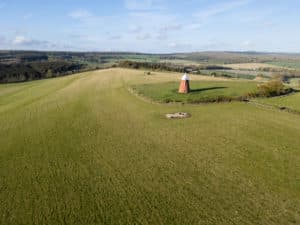
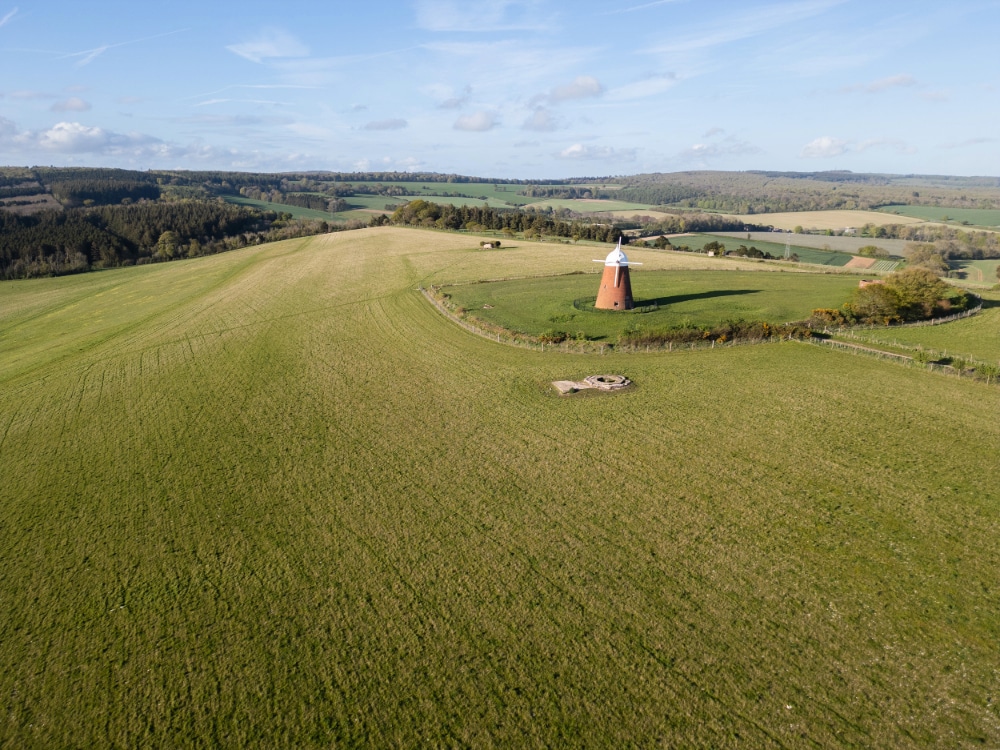
For developers who can’t deliver all of their required biodiversity gain on site Halnaker Hill Farm is 330-acres within the South Downs National Park and forms one of the largest BNG sites in the UK.
Farmland is being transformed into a landscape focused on nature recovery, restoring species-rich lowland calcareous (chalk) grassland, mixed scrub, woodland, ponds, individual trees and hedgerows.
More than 20,000 trees have been planted and 7km of hedgerows sown, alongside seeded wildflower meadows and dew ponds to encourage birds, bats, insects and mammals to take up residence.

Corn buntings, rare grey partridges and the endangered small blue butterfly have already been spotted within months of restoration work beginning, a sign that wildlife is thriving in the conditions Halnaker Hill Farm is creating.
There are 856 units available for purchase at the farm, which is commercially managed by Kingsbridge. The project plays an important role in supporting the South Downs National Park’s target to renature 33% of the National Park. By 2030.
If you’re looking at off-site BNG for a development, you can find out more about the units available at Halnaker Hill Farm here..